 Burke CPA
 Pro • tem legal solutons
 Burke Pros
 Concentric Wealth Management

Much like the “Long and Winding Road” made famous by The Beatles, the year’s journey has included unexpected turns, shifting conditions, and more than a few moments when the destination seemed uncertain. The second quarter brought renewed geopolitical tension, sharp swings in energy prices, persistent inflation concerns, changing expectations for monetary policy, and continued debate over the durability of artificial intelligence-related investment. Through it all, the global economy continued to expand, corporate earnings remained generally resilient, and equity markets advanced.
Although the road ahead remains unusually fluid, the underlying economic and corporate backdrop has not weakened enough to interrupt the expansion. Instead, the economy appears to be changing lanes. Consumers are contributing less at the margin, while business investment, manufacturing, infrastructure, and capital spending are carrying more of the load. Market leadership is also beginning to broaden, creating opportunities beyond the narrow group of companies that drove returns over the past few years.
A winding road does not require investors to turn around, but it does call for greater attention to speed, direction, and the risks around the next bend. Elevated valuations, narrow credit spreads, sticky inflation, fiscal pressures, and geopolitical uncertainty demand a disciplined approach. While the opportunity set is expanding and the path may not be direct, patience, perspective, and a well-constructed portfolio can help investors remain focused on the destination rather than every turn along the way.
Q1 Market Review
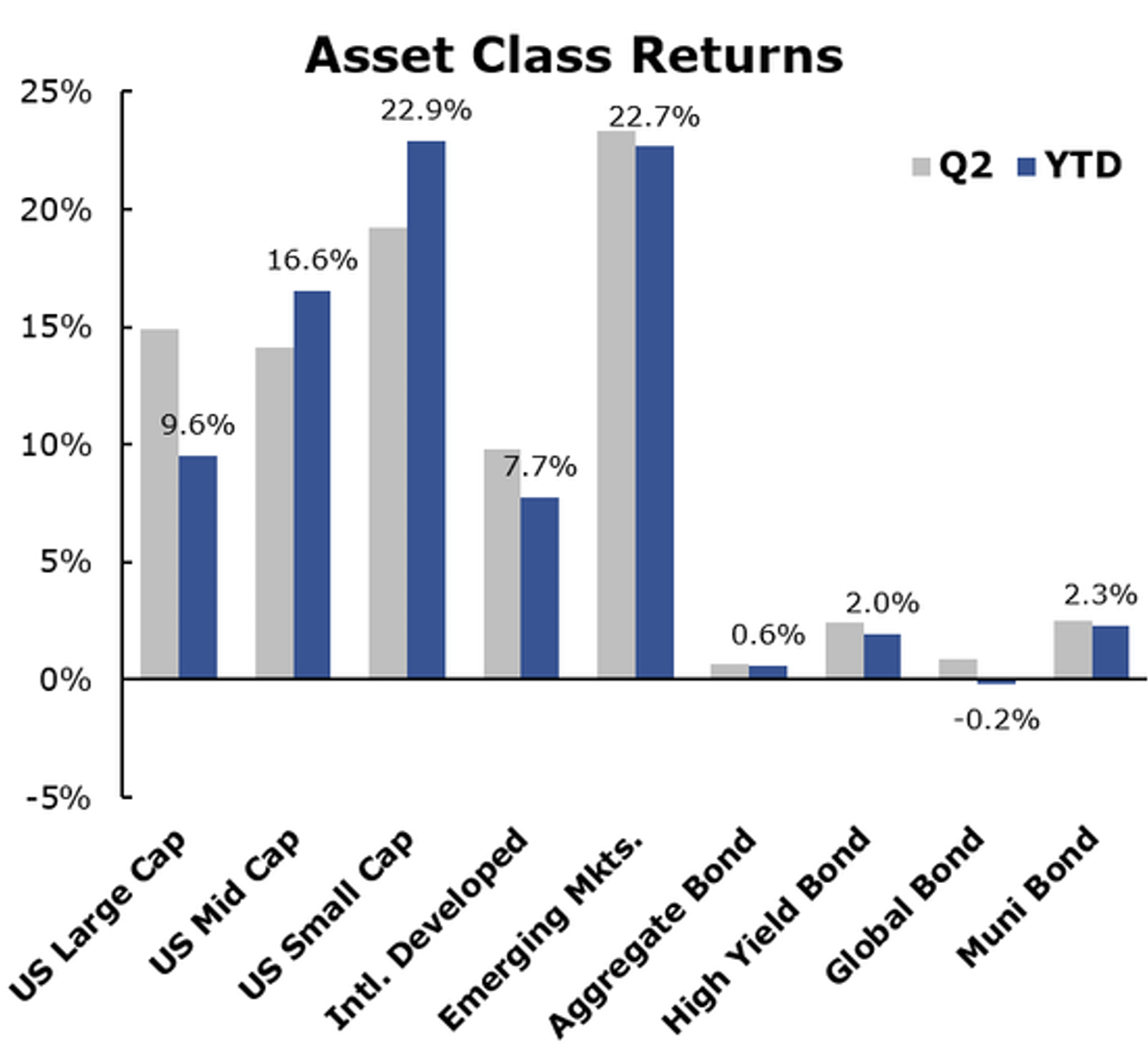
Global equities produced strong gains during the second quarter as investors looked beyond an early surge in geopolitical anxiety and refocused on earnings, investment spending, and the prospect of continued economic expansion. U.S. large-cap stocks were again supported by technology and artificial intelligence-related spending, but market leadership became more balanced as the quarter progressed. International markets also advanced, although results varied widely by region. Fixed-income markets were steadier than the headlines suggested, as elevated income helped offset price volatility caused by persistent inflation, heavy government borrowing, and shifting long-term growth expectations. Corporate bonds performed well as credit spreads tightened, though that strength leaves less cushion against future disappointment. Real assets delivered mixed results as energy prices spiked and then retreated alongside developments in the Middle East, while gold remained supported by geopolitical and fiscal uncertainty.
Economic Outlook
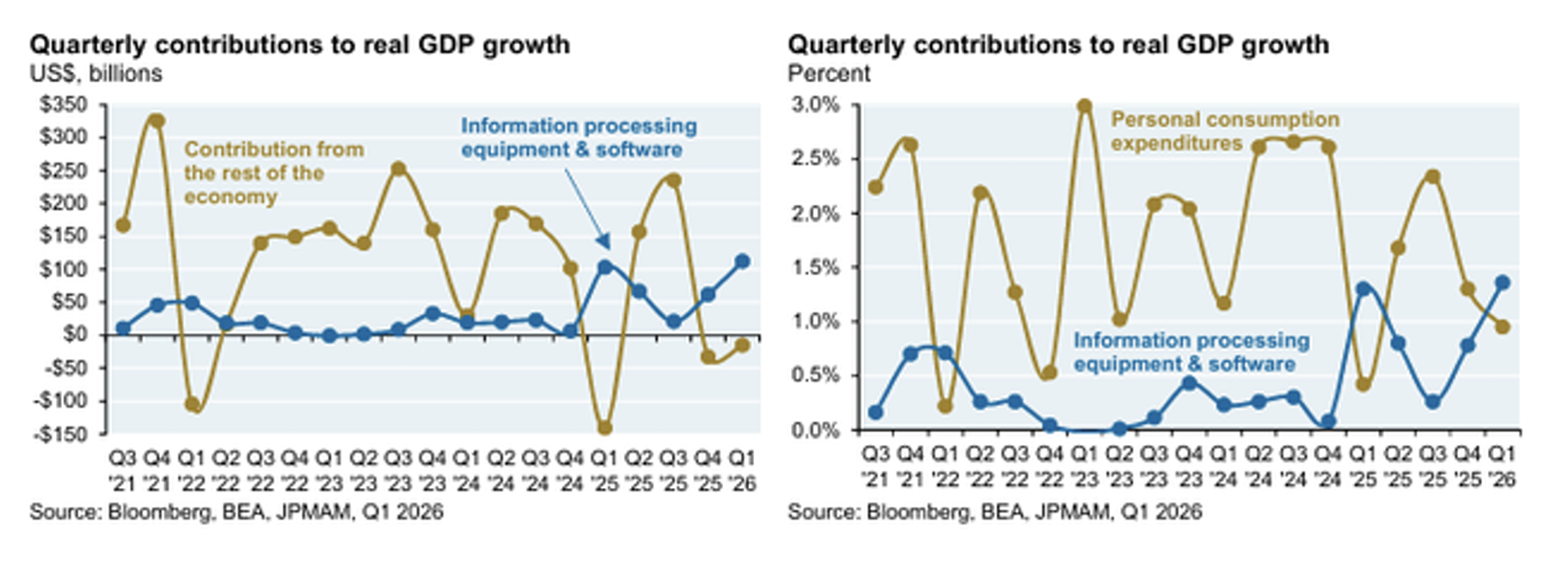
Our base case is for the U.S. economy to grow at a moderate pace through the remainder of 2026, although the mature expansion is changing shape. Household balance sheets remain generally healthy, unemployment is relatively low, and layoffs have been contained. However, hiring has cooled, savings have declined, and cumulative price increases continue to pressure lower- and middle-income households, suggesting consumer spending will remain positive but contribute less to growth. Business investment is increasingly taking the lead. Spending on computing semiconductors, power generation, capacity, data centers, grid modernization, defense, advanced manufacturing, and supply-chain resilience is supporting activity well beyond the technology sector. This cycle could extend the expansion, particularly if productivity improves, but companies will eventually need to demonstrate that their substantial capital commitments can produce durable cash flow.
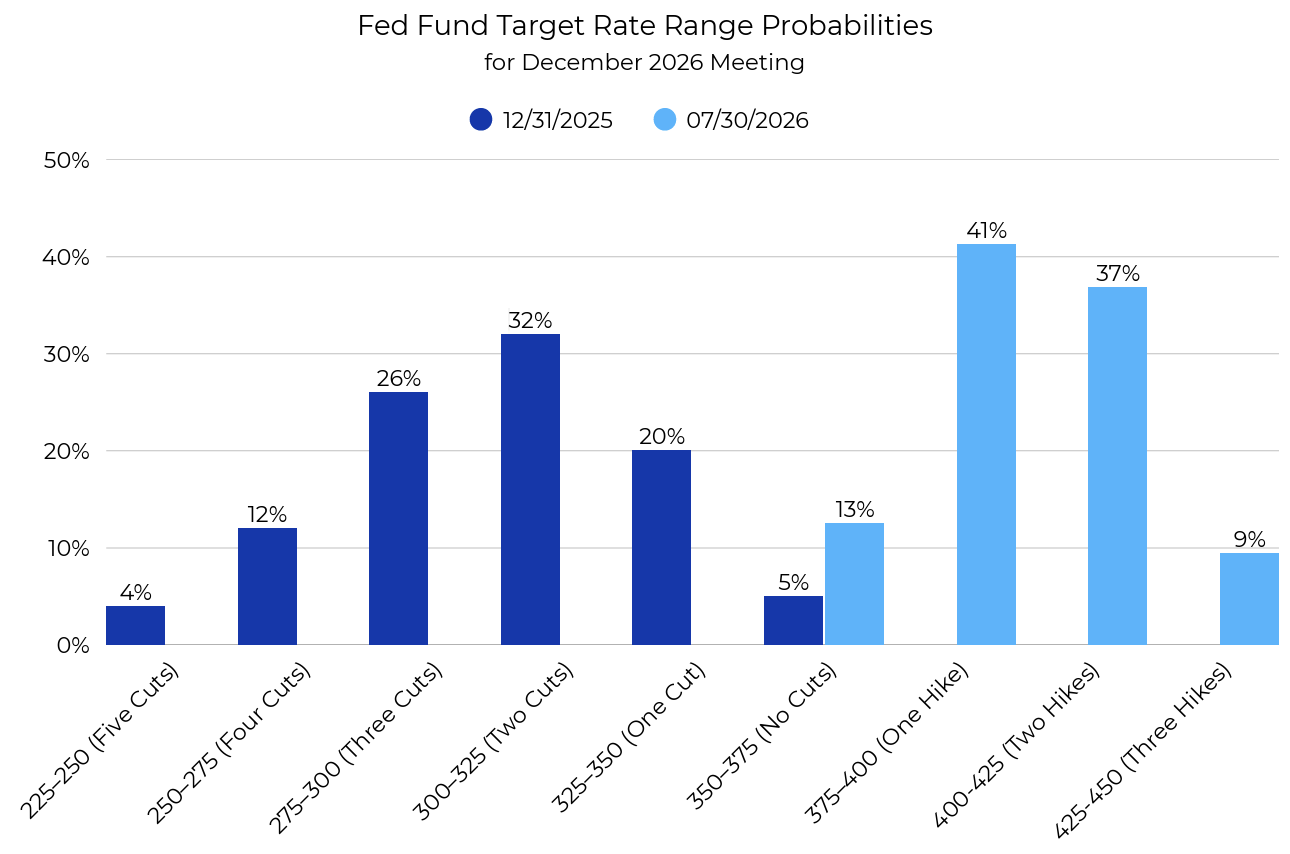
Inflation remains the principal constraint on monetary policy, with persistent pressure from services, housing, wages, energy, and trade-related costs likely to keep interest rates higher for longer.
Government spending and strategic investment may reinforce near-term activity, but large deficits and rising debt-service costs create longer-term risks. A renewed energy shock, disruptive trade conflict, weakening labor market, or resurgence in inflation could challenge the outlook, while stronger productivity, broader investment, and easing supply constraints could support continued growth alongside gradual disinflation.
Equity Markets
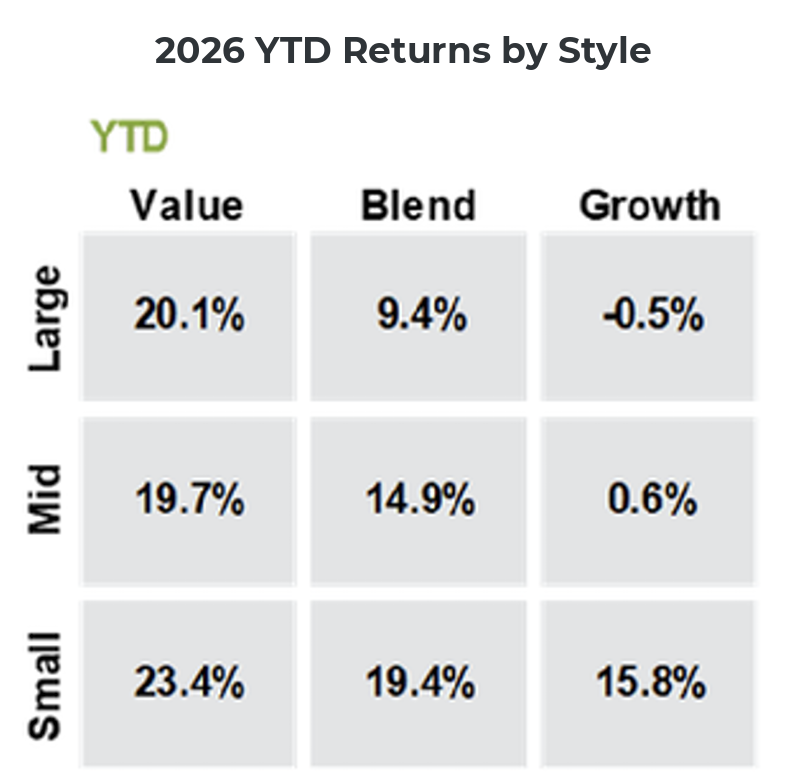
For U.S. equities, the debate is no longer simply whether artificial intelligence spending will continue, but which companies will ultimately earn attractive returns on it. Demand for computing power, memory, networking, electricity, and infrastructure remains substantial, though elevated expectations leave parts of the market vulnerable to disappointment. We remain constructive on the long-term productivity opportunity while recognizing that future returns will increasingly depend on earnings growth and selectivity rather than further valuation expansion.
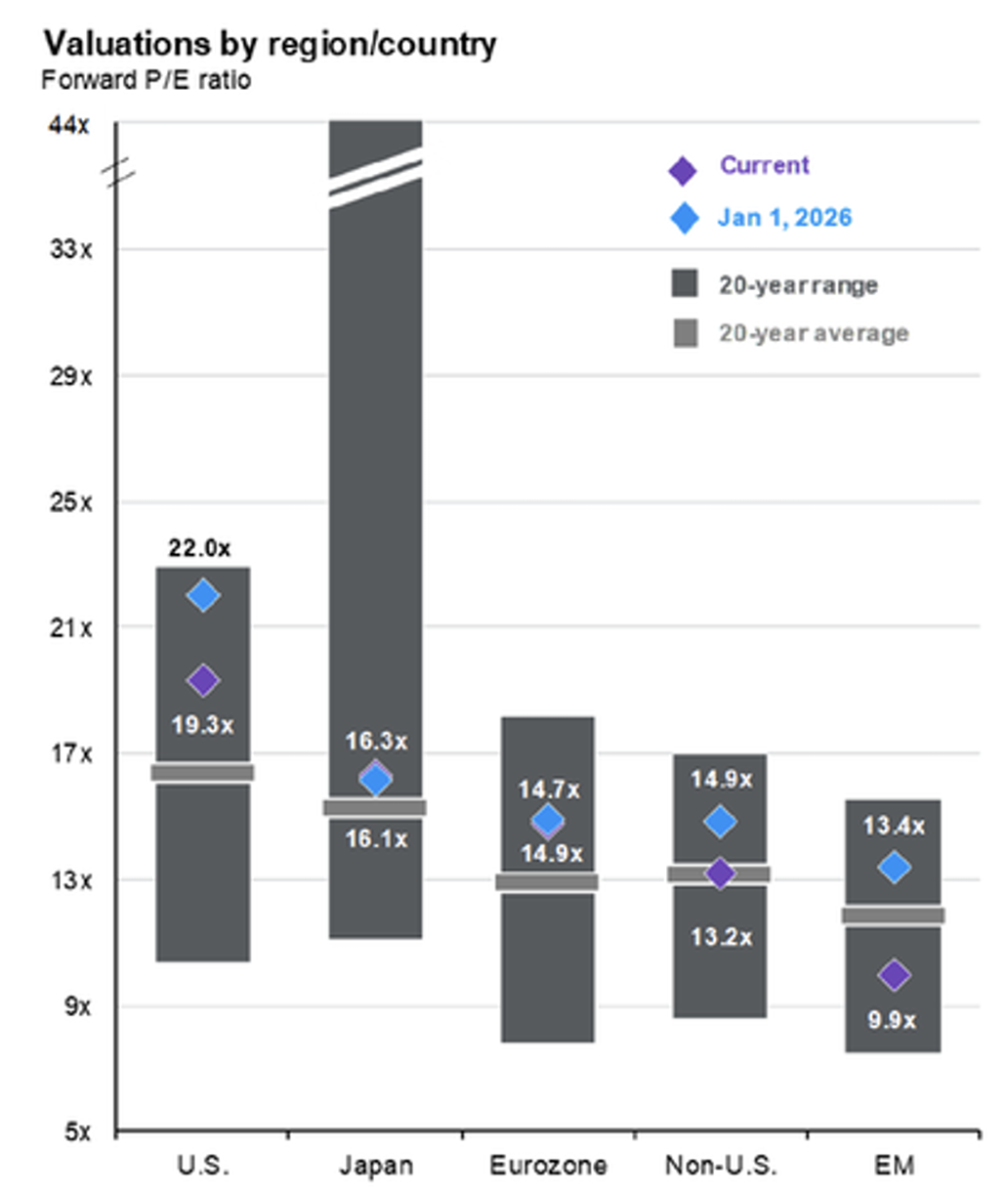
A broader earnings cycle would be a healthy development. For example, financials may benefit from continued economic growth, improving loan activity, and a more normal yield curve, while industrials and materials could participate in rising capital expenditures, manufacturing investment, grid expansion, defense spending, and supply-chain localization. Small and mid-sized companies could benefit if financing conditions stabilize and economic growth broadens.
Internationally, European valuations are attractive as industrial activity recovers and Japan continues to benefit from improved capital discipline. Emerging markets offer compelling long-term growth but require greater discrimination given elevated expectations. We favor global diversification focused on valuation, earnings quality, and country-specific fundamentals.
Fixed Income Markets
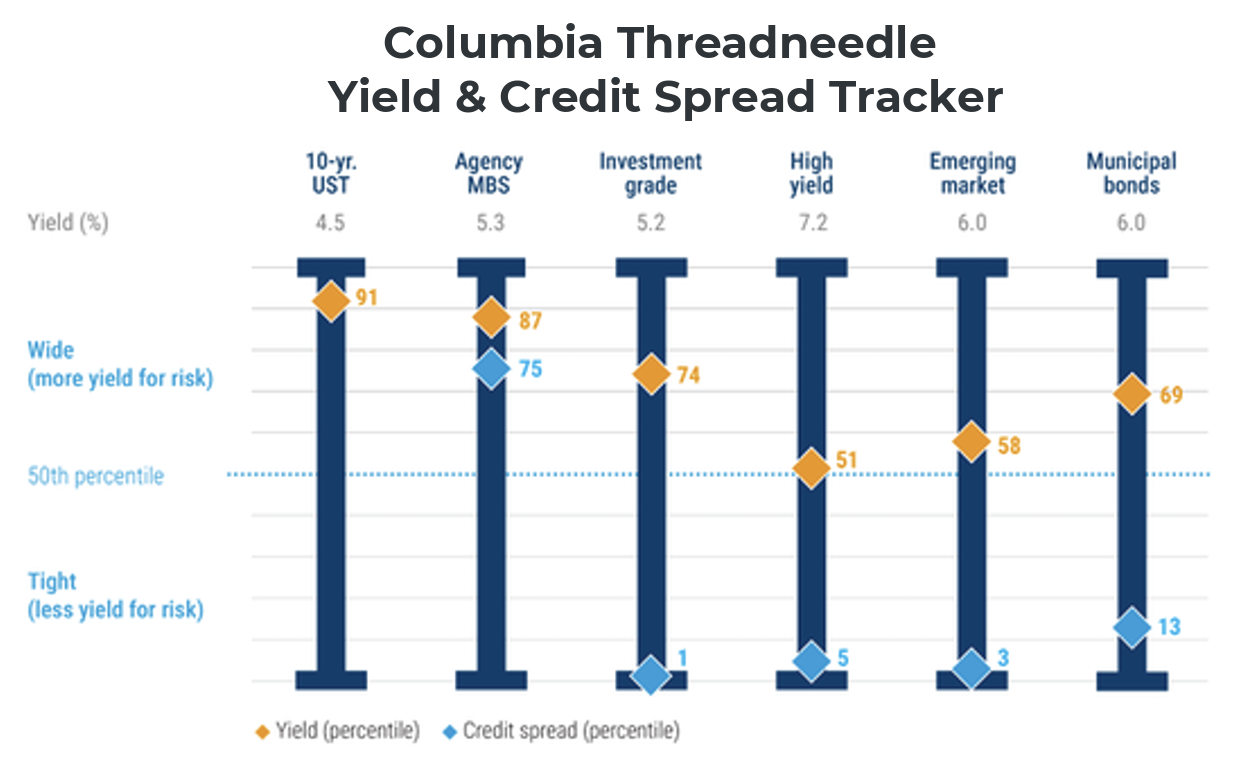
Fixed income is again capable of doing meaningful work in a diversified portfolio, with starting yields offering attractive income without requiring a significant decline in interest rates. Short- and intermediate-term high-quality bonds provide a favorable balance of income, stability, and flexibility, while longer-term government bonds may help if economic growth weakens but remain more sensitive to persistent inflation, heavy government borrowing, and changes in the term premium.
Credit markets require greater discipline, as generally sound corporate fundamentals and contained defaults have pushed spreads to historically tight levels. Although absolute yields remain attractive, investors are receiving relatively little additional compensation for assuming credit risk. We continue to favor quality, manageable maturities, strong collateral or cash flows, and structures that do not depend on easy refinancing. Municipal, securitized, and asset-backed bonds may provide differentiated sources of income, but careful underwriting and a clear understanding of the ultimate source of repayment remain essential.
Real Assets & Alternative Investments
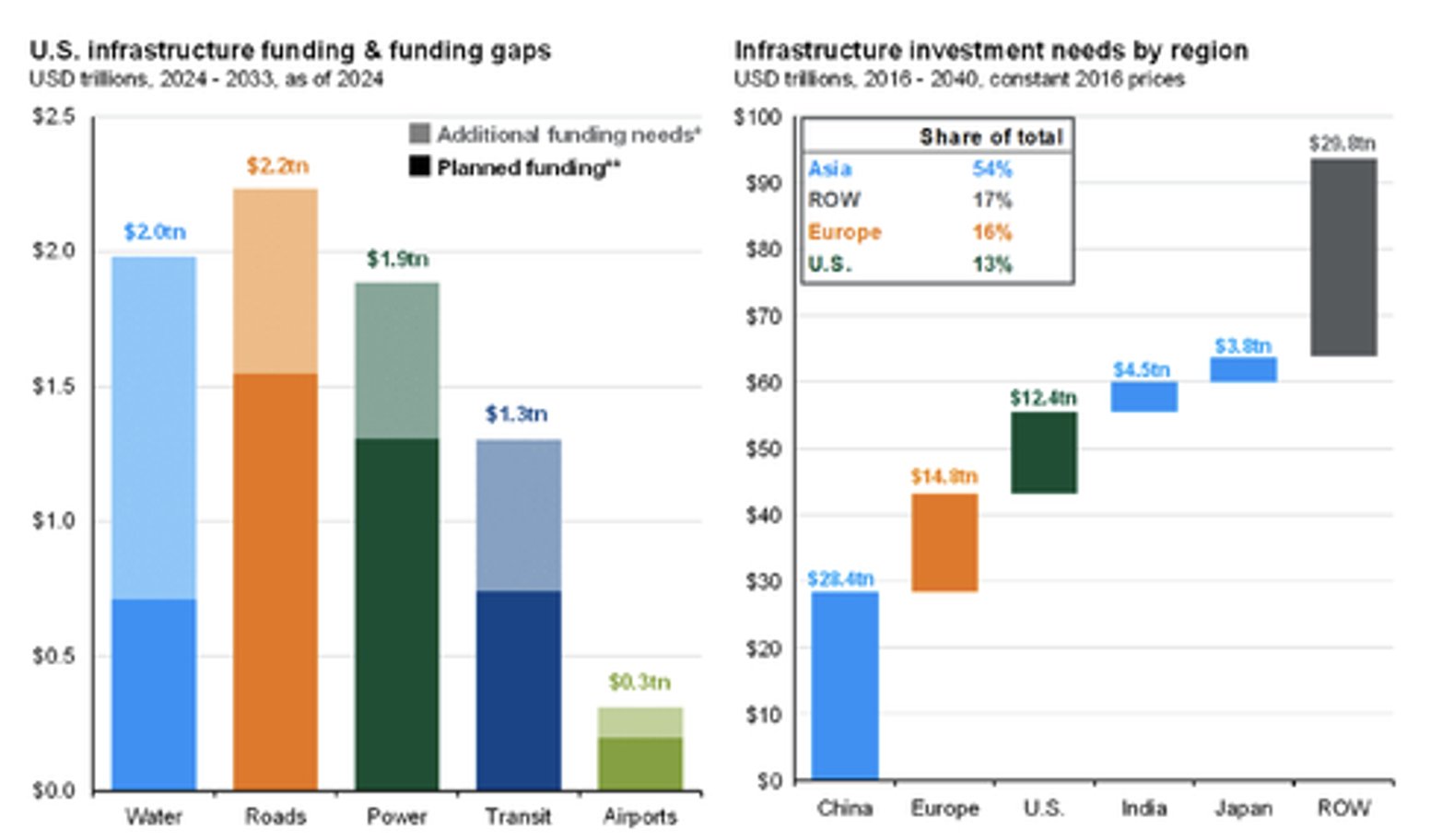
Real assets and alternative strategies remain important complements to traditional stocks and bonds. Infrastructure is well positioned at the intersection of rising electricity demand, data-center construction, grid modernization, domestic manufacturing, transportation, defense, and energy security.
Commodities can provide useful sensitivity to unexpected inflation and supply disruptions, although each market responds to different forces. Energy is influenced by production, inventories, geopolitics, and global growth, while industrial metals reflect construction and manufacturing demand and agricultural markets are shaped by weather and supply conditions. Gold may serve as a diversifier amid geopolitical fragmentation, fiscal uncertainty, and changing reserve preferences, but its lack of cash flow and potential volatility make it a portfolio component rather than a substitute for productive assets.
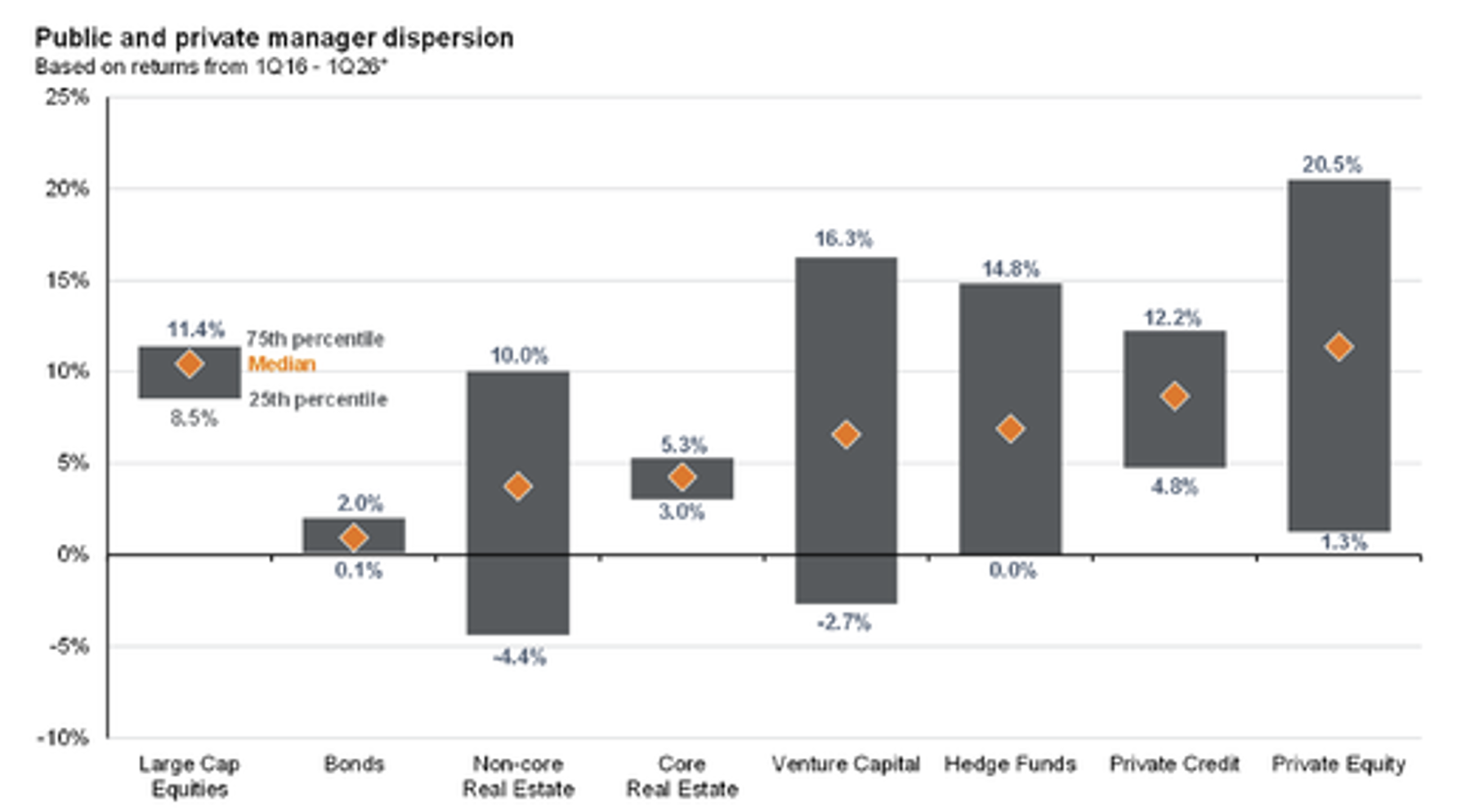
Overall outcomes in the private space depend heavily on manager skill, structure, transparency, fees, liquidity, and the underlying economic exposure. Investors lesser liquid strategies should be appropriately compensated for complexity and limited access to their capital. Ultimately, as we enter the remainder of the year, labels matter less than the actual source of return. The quality of the underlying cash flows or collateral and the strength of investor protections should become more in focus.
Summary: The Path Ahead
The third quarter begins with a resilient economy, supportive corporate profits, and a broader opportunity set but also with less room for error in several markets. We expect headlines around monetary policy, trade, geopolitics, energy, and artificial intelligence to continue generating volatility. Volatility itself is not a reason to abandon a sound plan; it is often the mechanism through which better long-term opportunities emerge. Our approach remains centered on diversification, valuation discipline, high-quality income, and exposure to durable sources of growth. We will continue to distinguish between temporary market noise and changes that alter the long-term investment case. That means participating in innovation without depending on a narrow group of winners, using fixed income for both income and resilience, and maintaining real-asset and alternative exposures that can respond differently across economic environments.
Markets will continue to evolve, but a well-constructed plan is designed to endure more than a single quarter. We appreciate the trust you place in us and look forward to helping you navigate the opportunities and challenges ahead.
Disclosures
Asset allocation does not assure or guarantee better performance and cannot eliminate the risk of investment losses. Information has been obtained from sources believed to be reliable, though not independently verified. Any forecasts are hypothetical and represent future expectations and not actual return volatilities and correlations will differ from forecasts. This report does not represent a specific investment recommendation. The opinions and analysis expressed herein are based on Concentric Wealth Management research and professional experience and are expressed as of the date of this report. Please consult with your advisor, attorney and accountant, as appropriate, regarding specific advice. Past performance does not indicate future performance and there is risk of loss. All investing involves risk including loss of principal. No strategy assures success or protects against loss There is no guarantee that a diversified portfolio will enhance overall returns or outperform a non-diversified portfolio. Diversification does not protect against market risk. Rebalancing a portfolio may cause investors to incur tax liabilities and/or transaction costs and does not assure a profit or protect against a loss. The fast price swings in commodities will result in significant volatility in an investor’s holdings. Commodities include increased risks, such as political, economic, and currency instability, and may not be suitable for all investors.
When referencing asset class returns or statistics, the following indices are used to represent those asset classes, unless otherwise noted. Each index is unmanaged, and investors can not actually invest directly into an index:
- US Large Cap – S&P 500 Total Return
- US Mid Cap – S&P 400 Total Return
- US Small Cap – S&P 600 Total Return
- International Developed – MSCI EAFE Total Return
- Emerging Markets – MSCI Emerging Markets Total Return
- Aggregate Bond – Bloomberg US Aggregate
- High Yield Bond – Bloomberg US Corporate High Yield
- Global Bond – Bloomberg Global Aggregate
- Municipal Bond – Bloomberg Municipal Bond
Domestic Equity can be volatile. The rise or fall in prices take place for a number of reasons including, but not limited to changes to underlying company conditions. International Equity can be volatile. The rise or fall in prices take place for a number of reasons including, but not limited to changes to underlying company conditions. Fixed Income securities are subject to interest rate risks, the risk of default and liquidity risk. U.S. investors exposed to non-U.S. fixed income may also be subject to currency risk and fluctuations. Cash may be subject to the loss of principal and over a longer period of time may lose purchasing power due to inflation sector or industry factors, or other macro events. These may happen quickly and unpredictably. International equity allocations may also be impacted by currency and/or country specific risks which may result in lower liquidity in some markets. Marketable Alternatives involves higher risk and is suitable only for sophisticated investors. Along with traditional market risks, marketable alternatives are also subject to higher fees, lower liquidity and the potential for leverage that may amplify volatility or the potential for loss of capital. Additionally, short selling involved certain risks including, but not limited to additional costs, and the potential for unlimited loss on certain short sale positions.
S&P Total Return 500 – Covers the 500 largest companies that are in the United States. These companies can vary across various sectors.
S&P MidCap 400 Total Return Index- A stock market index from S&P Dow Jones Indices. The index serves as a barometer for the U.S. mid-cap equities sector and is the most widely followed mid-cap index.
S&P SmallCap Total Return 600 – Seeks to measure the small-cap segment of the U.S. equity market. The index is designed to track companies that meet specific inclusion criteria to ensure that they are liquid and financially viable.
MSCI EAFE Total Return Index – An equity index which captures large and mid cap representation across 21 Developed Markets countries* around the world, excluding the US and Canada. The index covers approximately 85% of the free float adjusted market capitalization in each country.
MSCI Emerging Markets Total Return Index – Captures large and mid cap representation across 25 Emerging Markets (EM) countries. The index covers approximately 85% of the free float-adjusted market capitalization in each country.
Bloomberg US Aggregate Bond Total Return Index – Used as a benchmark for investment grade bonds within the United States.
Bloomberg US Corporate High Yield Total Return Index – Covers performance for United States high yield corporate bonds. This index serves as an important benchmark for portfolios that include exposure to riskier corporate bonds that might not necessarily be investment grade.
Bloomberg Global Aggregate Total Return Index – Measures the performance of global investment grade fixed income securities. This index is widely used as a benchmark for fixed income securities.
Bloomberg Municipal Total Return Index – Serves as a benchmark for the US municipal bond market.
Investing involves risks, and investment decisions should be based on your own goals, time horizon, and tolerance for risk. The return and principal value of investments will fluctuate as market conditions change. When sold, investments may be worth more or less than their original cost. Indexes discussed are unmanaged and you cannot directly invest into an index. Past performance is not a guarantee of future results.
Securities and advisory services offered through LPL Financial, a registered investment advisor, Member FINRA/SIPC.